Through
the
Viewfinder
Joseph McKenzie
19 March 1929 – 5 July 2015
Through
the
Viewfinder
Joseph McKenzie
19 March 1929 – 5 July 2015
‘NEGLECTED & FORGOTTEN’
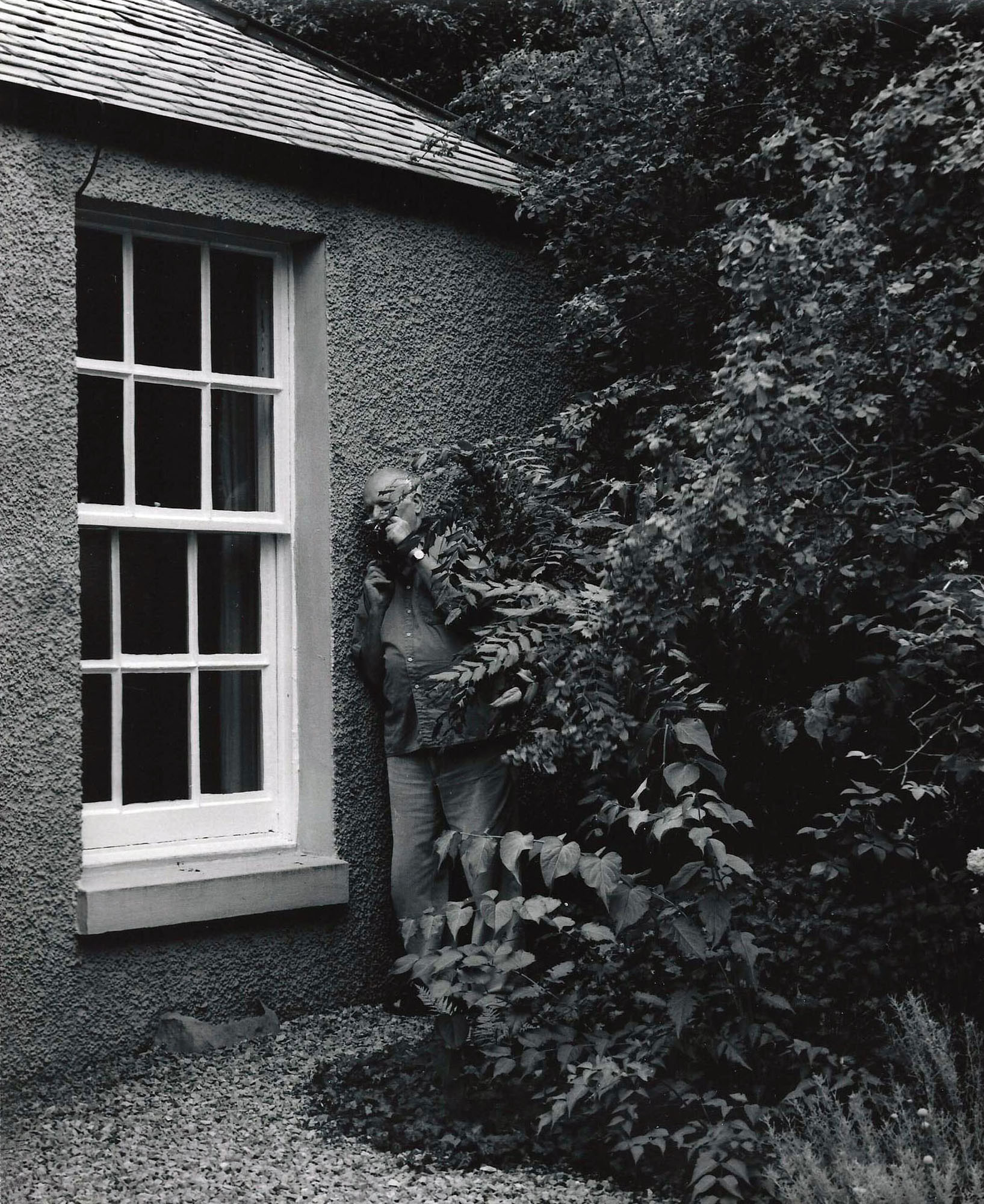
Joseph McKenzie was born in London on 19th March 1929. He was born into relative poverty and aspired from a young age to own a camera. In 1946, much to his mother’s distress he spent his first earnings as a clerk on a camera. His mother seized the camera and threw it across the room in disgust. However, this did not deter him. In 1947, and facing conscription, McKenzie applied to join the RAF photographic reconnaissance unit believing that they would teach him photography. Concluding his RAF service in 1952 he went on to study photography at London School of Printing. Excelling in his craft and ability Joseph was offered, upon graduating in 1954 a full-time role to teach photography at St Martins School of Art. Advancing his career he moved to Duncan of Jordanstone College of Art in Dundee in 1964 from where he was to start his journey recording life in Scotland. From Caledonian Images to Crisis of Relationship his work was to evolve from public integration to that of one in solitude.
Joseph McKenzie was a man with a social conscience and was very aware of what went on around him. He had experienced the blitz living in the East end of London and upon moving to Scotland witnessed first-hand similar destruction of buildings on the pretext of improvement. He felt duty bound to record this and carried out a series of major photographic studies. His lunch times and weekends were spent walking the streets of Dundee, camera in hand. Today Dundee forms one of his largest studies and is compiled of several smaller essays focusing on the people and changes taking place (Dundee – City in Transition 1964-1986). He was also inspired by the work of Scottish artist Joan Eardley and visited Glasgow between 1964-65 where he recorded an incredible study of the children in one of the most deprived areas titled Glasgow Gorbals Children. Seeing these studies the Carnegie Trust in Dunfermline asked him to compile a similar study which was titled Dunfermline and its people which was completed in 1967. Joseph McKenzie also undertook many private commissions including the Building of the Tay Road Bridge; Glenlivet Distillery; Oil; and was also known for his portraiture including The Duke of Edinburgh, Lord Mountbatten, Edward Heath and many more local dignitaries and artists. Wherever he went his camera went with him and has contributed to the extent and diversity of his vast legacy of work.
In 1967, concerned by the brewing troubles which were being reported in Ireland he headed to Stranraer and caught a ferry to Belfast. Over the next two years he compiled a study which compared life in Southern Ireland with the troubled North. The exhibition which followed comprised of 295 photographs mounted on card with the use of orange and green coloured ribbons to signify location. This was also accompanied by an eloquently compiled and written statement of his findings. Unknown to him the latter was censored ahead of the exhibition and upon discovering this, and being a man of principle, Joseph withdrew from public exhibition.
In 1974 he opened the first private photography gallery in Scotland at his home in Tayport. By appointment only he displayed an exhibition titled Homeland which ran until 1980 when the gallery was closed. He has written extensively with an autobiography and daily diaries and composed over 3,000 poems.
In 1984 I encouraged my father to allow me to assist in the promotion of his work and have been working with the archive since. I immediately sold a collection of work to the V & A who also kindly arranged for me to meet with John Szarkowski at the Museum of Modern Art (MOMA) in New York. He was most encouraging finding it unbelievable that work of this quality had originated from Europe and likened it to many of the great American social documentary photographers. He encouraged me to persevere and in 1987 I relaunched my father with a touring exhibition Pages of Experience which was also accompanied by a state-of-the-art publication of the same name. Since then, work has exhibited extensively with the sale and placement of work within art institutions and private collections globally.
The journey has taken the work full circle. Today 11 years after the death of my father and 52 years after he opened the first private gallery of photography in Britain, I am delighted to honour his legacy and reopen a gallery dedicated to his work. This in the hope that things have indeed changed since 1974!
Frank McKenzie